English| EUR
Suggested for you
More currencies
Choose a language
La Jolla Cove sits within the San Diego-La Jolla Underwater Park Ecological Reserve, one of California's most accessible shore-diving sites. The protected waters shelter garibaldi, leopard sharks, and dense kelp forests just steps from the sand. This guide covers how to snorkel la jolla cove safely and what conditions make or break your visibility.
Quick answer
Enter the water from the sandy beach at the east end of the cove or from the rocky tide pools on the west side when swells are below three feet. Arrive between 7:00 and 10:00 AM for the calmest surface and clearest water. Visibility ranges from 10 to 30 feet depending on surge and recent storms. The reserve prohibits collecting or disturbing marine life, and all entry is free year-round.
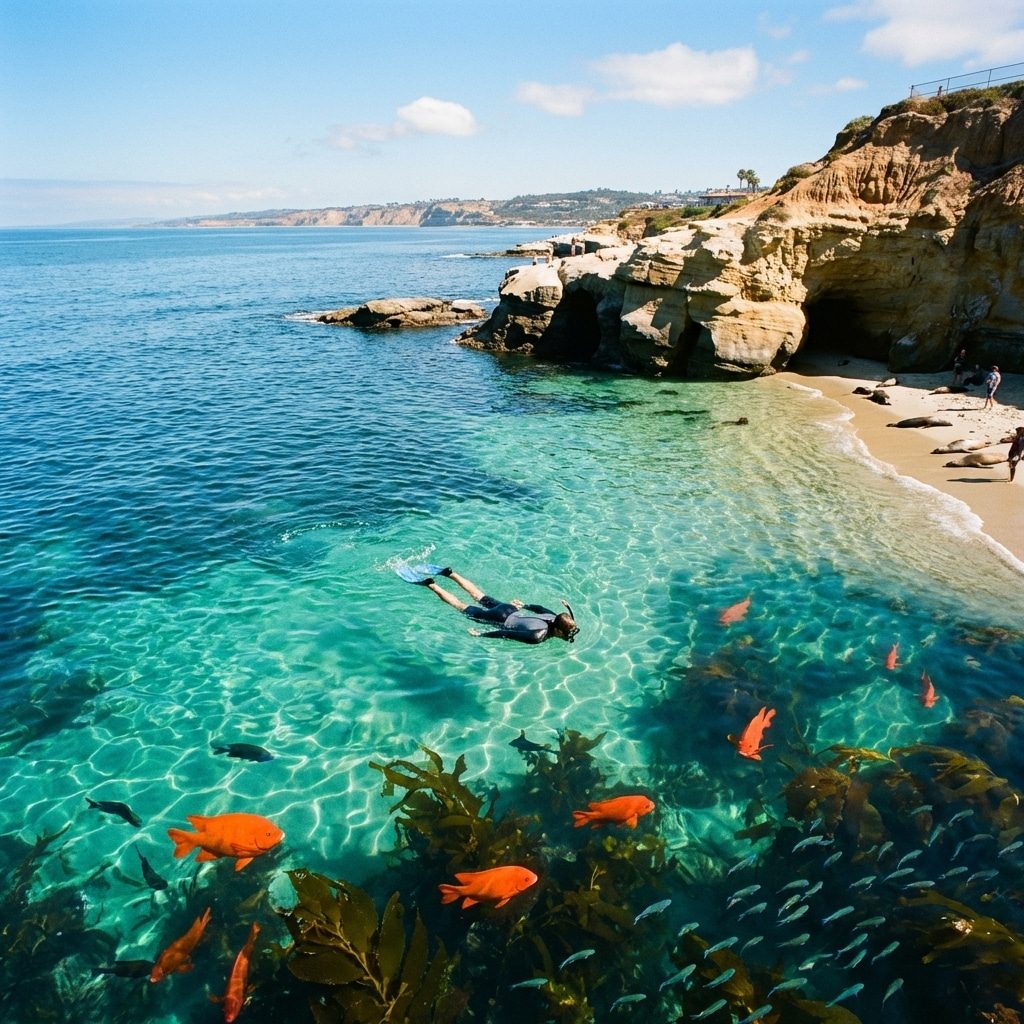
La Jolla Cove holds more than 60 species of fish within a sixth of a square mile, protected since 1971 under California's Marine Life Protection Act. The concentration of life draws thousands of snorkelers annually, yet many first-timers misjudge the entry or arrive when afternoon wind chop has reduced visibility to arm's length. Snorkeling la jolla successfully depends on reading the conditions before you wade in. The east beach entry is forgiving in calm surf but turns into a washing machine when swells exceed four feet. The western kelp beds offer the richest biodiversity, including bright orange garibaldi and the occasional sevengill shark, but require confident surface swimming over rocks. Wetsuit thickness matters: water temperatures range from 57°F in winter to 68°F in late summer, cold enough that most snorkelers rent or bring a 5mm suit. The reserve's no-take rule means fish behavior is unusually bold; garibaldi will hover inches from your mask, and bat rays rest openly on sand patches between rock formations. Local guides recommend checking the La Jolla Shores buoy report before entering and avoiding days with surf forecasts above three feet or recent runoff events that cloud nearshore water. The cove's narrow geography funnels swells, so a report of two-foot waves elsewhere can translate to rougher conditions inside the reserve. Most snorkelers stay within 100 yards of shore, following the kelp line north toward the sea caves. The bottom slopes gradually from three to fifteen feet, shallow enough that you can stand and rest on sand but deep enough to see pelagic visitors during the right season. Leopard sharks gather in the adjacent shallows from June through September, and the occasional sea lion will investigate snorkelers, curious but rarely aggressive. Understanding how to snorkel la jolla cove includes knowing when not to enter. Winter king tides expose the tide pools but create strong surge in the swim zone. Afternoon onshore winds between May and August roughen the surface by midday. The reserve's accessibility is its greatest strength and its operational challenge; parking fills by 9:00 AM on weekends, and the beach crowds enough that entry timing becomes as important as water conditions.
“The reserve's no-take rule means fish behavior is unusually bold; garibaldi will hover inches from your mask, and bat rays rest openly on sand patches between rock formations.”
This guide walks you through the physical steps of snorkeling La Jolla Cove, from water entry to safe exit. The entire snorkel loop typically takes 30–45 minutes depending on conditions and how far you explore.
Wade in from the small beach at the base of the cove rather than climbing over rocks. The sandy entry is on the right side when facing the water and offers the safest footing.
Move beyond where waves are cresting, usually 15–20 feet from shore. Stay parallel to the beach until you clear the turbulence before heading toward the kelp beds.
The right-hand cliff face hosts the densest marine life and provides a natural reference line. Keep the wall within 10–15 feet to spot lobsters, octopus, and garibaldi in the crevices.
Swim through the kelp canopy slowly with arms at your sides to avoid tangling. If you do snag, stop moving and gently lift the blade over your head rather than pulling.
Complete the loop by following the left wall back toward shore, which offers calmer water and a different reef structure. This route keeps you oriented and reduces the chance of drifting past the cove.
Return to the same sandy area and time your exit between wave sets. Walk backward out of the shallows while watching incoming swells to avoid being knocked over.
La Jolla Cove is part of a public ecological reserve, meaning there are no entrance fees required to access the beach or the water for snorkeling. All visitors may enjoy the area at no cost.
Verdict: A typical adult pays 0 USD for entry, as there are no ticketed access points or admission fees for the cove.
La Jolla Cove is located at 1100 Coast Blvd, La Jolla, CA 92037. Visitors typically reach the site by driving or using local bus services before walking a short distance to the beach entrance.
I-5 freeway to La Jolla Village Drive, proceed to Coast Blvd
MTS Route 30 to La Jolla Blvd & Marine St
Walk from Scripps Park along the sidewalk to the beach access stairs
Parking is limited in the immediate vicinity of Coast Blvd, so arriving during the best arrival window of 07:00–10:00 is essential to secure a spot and enjoy calmer water conditions.
La Jolla Cove is accessible to the public every day of the week, twenty-four hours a day. Visitors may arrive at any time to access the beach and cove area.
La Jolla Cove lies within the San Diego-La Jolla Underwater Park Ecological Reserve, where state law protects all marine life and habitats. Following these rules preserves the ecosystem and keeps you safe around wild animals.
Pack the right gear and plan your logistics to make the most of your time in the water.
Everything you need to know about how to snorkel la jolla cove
To learn how to snorkel La Jolla Cove, start by ensuring you have properly fitted gear and stay within the designated swimming area. Beginners should remain near the shore to observe the calm, protected waters of the ecological reserve.
The best time to learn how to snorkel La Jolla Cove is between 07:00 and 10:00. Arriving during this window provides the calmest water, optimal visibility, and the best chance for easier parking.
There is 0 USD entrance fee to the beach and cove. You do not need to pay to access the shoreline for your water activities.
When planning how to snorkel La Jolla Cove, you should bring a mask, snorkel, and fins to navigate the marine sanctuary effectively. Wetsuits are often recommended to maintain warmth in the Pacific water, especially during autumn.
Yes, the site is monitored by the San Diego Lifeguard Service. It is important to swim near these safety stations and always observe posted water conditions.
You can find the location at 1100 Coast Blvd, La Jolla, CA 92037. Once you arrive at the address, follow the stairs down from the park area to reach the water entry point.
Children can join in if they are strong swimmers and comfortable with ocean water. Always supervise young swimmers closely and ensure they have properly sized flotation gear while exploring the kelp forest.
The reserve is home to bright orange Garibaldi, leopard sharks, and various rays. You may also observe seals and sea lions resting on the nearby rocks or swimming in the cove.