English| EUR
Suggested for you
More currencies
Choose a language
The San Diego-La Jolla Underwater Park stretches across 6,000 acres of protected coastline and seafloor, making it California's first designated ecological reserve. Access is free, the water is open daily, and the kelp forest begins just offshore. Here's what you need to know before you enter the water.
Quick answer
Snorkeling La Jolla Underwater Park is free and accessible 24 hours daily from the beach at 1100 Coast Blvd. Morning arrivals between 7:00 and 10:00 AM offer the calmest conditions and clearest visibility before afternoon winds churn the surface. The reserve protects garibaldi, leopard sharks, and kelp bass within California's first marine conservation area, established in 1971.
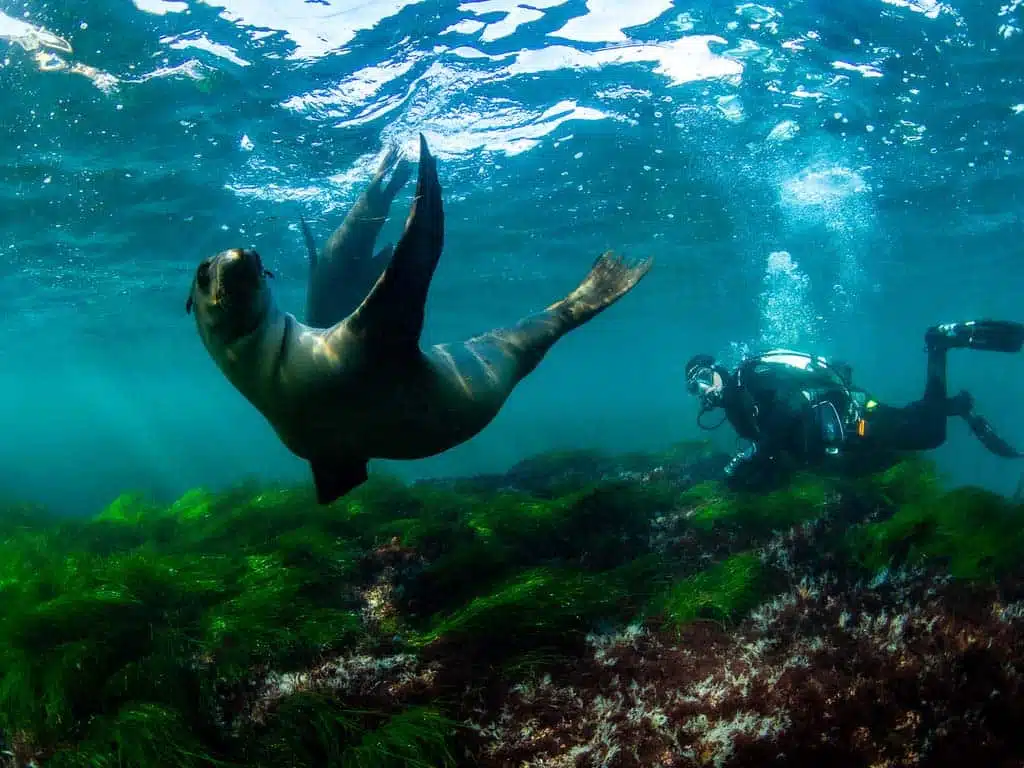
The San Diego-La Jolla Underwater Park was designated in 1971, making it the oldest marine protected area on California's coast. The reserve spans from La Jolla Cove south to La Jolla Shores, covering both sandy channels and kelp-covered reefs that drop to 30 feet. What makes this site unusual is not the depth but the density—California's kelp forests concentrate more species per square meter than most tropical reefs. Snorkeling la jolla underwater park means navigating a working ecological reserve where fishing and shellfish collection are prohibited. The garibaldi, California's state marine fish, patrols the kelp with territorial aggression. Leopard sharks rest in the sandy shallows near the shore during summer months. Kelp bass, señoritas, and occasional bat rays move through the water column. The protection has been in place long enough that fish approach snorkelers without panic, but feeding or touching any marine life carries a fine. Visibility varies with surge and season. Winter storms stir sediment and reduce clarity to 5 feet. Summer mornings before wind builds offer 15 to 25 feet of visibility. The cove's shape funnels swell energy into the beach, creating strong surge even on calm days. Entry and exit require timing—wait for the lull between wave sets and move quickly over the rocks. The absence of an entrance fee does not mean the site is unregulated. San Diego lifeguards monitor conditions from the tower above the beach and post warnings when swells exceed safe limits for snorkeling. The kelp forest itself is a physical structure. Giant kelp anchors to the reef with holdfasts and rises to the surface on gas-filled bladders. The canopy filters light and dampens wave action, creating a quieter underwater environment than open water. Snorkelers exploring la jolla underwater park guide themselves by following the kelp edge rather than swimming straight offshore. The densest marine activity happens where kelp meets sand, not in the open channels. Rental shops line the streets above the cove, but the beach offers no facilities—no showers, no changing rooms, no equipment storage. Plan accordingly.
“The kelp forest concentrates more species per square meter than most tropical reefs, despite the cold water and limited visibility.”
The best arrival window is 07:00–10:00, as mornings typically have calmer winds and better water clarity before afternoon chop builds. Selecting these early hours provides the most stable conditions for navigating the underwater park.
Water temperatures reach 70°F–72°F
This period offers the warmest water temperatures of the year. Visibility remains consistent during morning hours.
Temperatures range from 62°F–66°F
While water is cooler, the lack of intense seasonal swell often provides clear conditions. Morning arrivals avoid midday coastal breezes.
—
Visiting on weekdays between 07:00 and 10:00 minimizes human congestion in the water. Calm surface conditions make entry and exit at the beach more manageable.
Verdict: For optimal conditions, plan to arrive between 07:00 and 10:00 on a weekday during September or October.
Access to the La Jolla Underwater Park and the surrounding beach area is managed as a public resource. There are no entrance fees required to visit or snorkel at this location.
Verdict: The entrance fee is 0 USD for all visitors, as the park is a public area.
The La Jolla Underwater Park and beach areas are accessible to the public 24 hours a day, seven days a week.
The La Jolla Underwater Park is located at 1100 Coast Blvd, La Jolla, CA 92037, United States. Visitors typically reach this area via personal vehicle or local transit options serving the La Jolla village coastal district.
Follow I-5 to La Jolla Village Drive, proceed west to Torrey Pines Road, and follow signs toward La Jolla Cove.
Take MTS Route 30 toward La Jolla and exit at La Jolla Blvd and Pearl St, followed by a walk to the coast.
Request drop-off at 1100 Coast Blvd, La Jolla, CA 92037.
Parking in the vicinity of La Jolla Cove is highly limited and fills quickly, so arriving early is recommended. Be prepared to search for street parking in the residential areas above the beach if the designated lots are full.
La Jolla Underwater Park is a protected marine reserve where state regulations prohibit taking or disturbing any marine life, plants, or geological features. Following these rules protects the ecosystem and keeps you compliant with California law.
Everything you need to know about snorkeling la jolla underwater park
Entry to the beach and the protected marine area is 0 USD. You do not need to pay a fee to access the water for recreational activities.
The area is open from 00:00–23:59 daily, allowing you to plan your visit at any time. However, the best arrival window for snorkeling La Jolla Underwater Park is between 07:00 and 10:00 to avoid afternoon chop.
Visiting during the morning hours provides the best water clarity and calmer winds. This local landmark experiences less surface turbulence early in the day, making it ideal for coastal exploration.
While the site is accessible to many, participants should be comfortable swimming in the open ocean. Always check local lifeguard reports before entering the water for your snorkeling La Jolla Underwater Park excursion.
Equipment rental shops are located within walking distance of the beach. These facilities provide necessary gear such as masks, snorkels, and fins to visitors looking to explore the kelp forest.
The ecological reserve is home to bright orange Garibaldi, leopard sharks, and various rays. Snorkelers often observe the diverse ecosystem of this protected habitat during their time in the water.
Guided tours are not mandatory but can be helpful for those unfamiliar with the area. A professional excursion can provide safety instructions and lead you to the most vibrant sections of the habitat.