
English| EUR
Suggested for you
More currencies
Choose a language
La Jolla Cove draws thousands of snorkelers each year to its protected marine reserve, but shifting currents and wildlife encounters demand preparation. This guide covers the conditions that define safe snorkeling at the Cove, from surge patterns to sea lion behavior, so you know what to expect before entering the water.
Quick answer
Yes, La Jolla Cove is generally safe for snorkeling when conditions are calm, typically during summer months and early morning hours. The protected cove offers relatively gentle water compared to open coastline, but surge, occasional riptides, and territorial sea lions require vigilance. Inexperienced swimmers should stay near shore, monitor swell forecasts, and snorkel only when lifeguards are present.
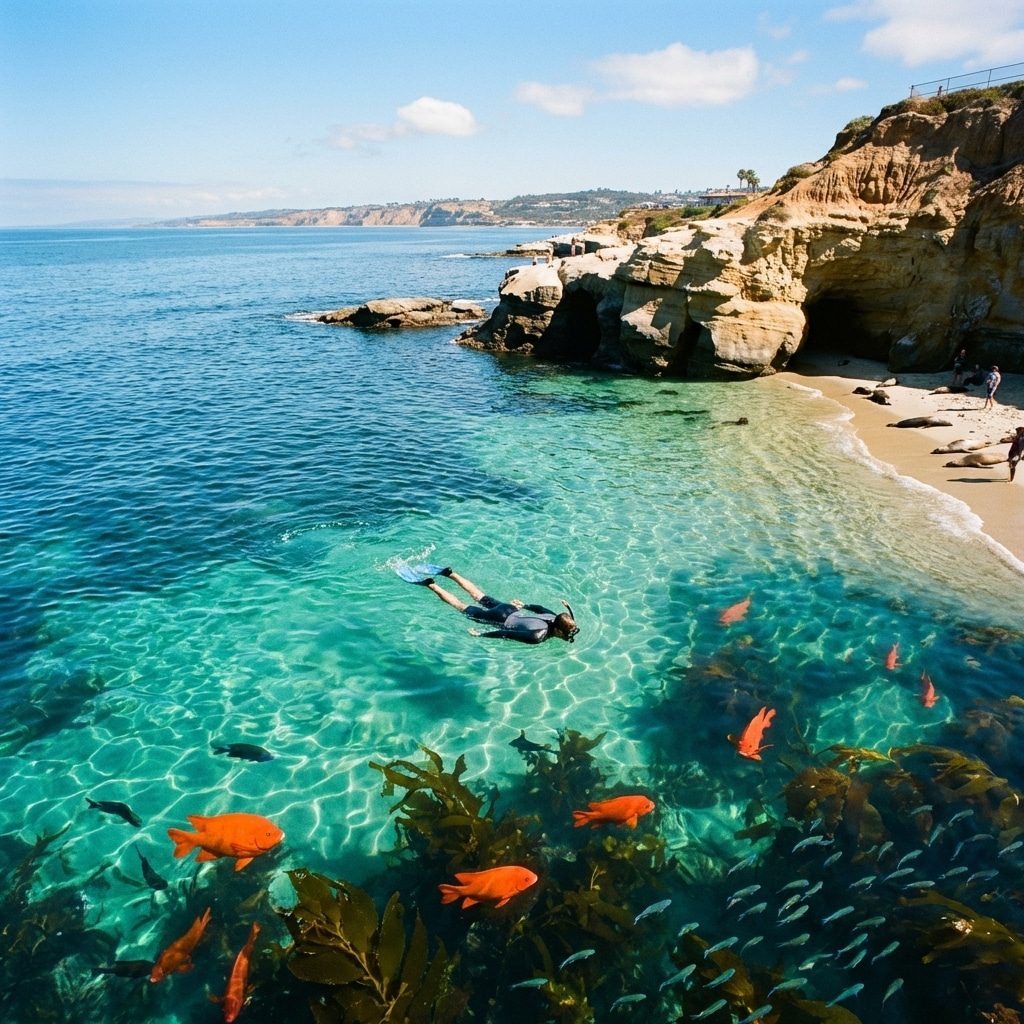
La Jolla Cove sits inside the San Diego-La Jolla Underwater Park Ecological Reserve, a 6,000-acre protected zone where kelp forests and rocky reefs host over 500 marine species within swimming distance of shore. The question of whether it's safe to snorkel in La Jolla Cove hinges not on a single answer but on understanding the variables that shift daily: swell direction, tidal exchange, visibility, and the presence of breeding sea lions. The Cove's natural horseshoe shape buffers wave energy from the southwest, creating calmer surface conditions than nearby beaches like Windansea or Blacks Beach. Summer months—June through September—deliver the most predictable windows, with morning offshore winds flattening the surface and underwater visibility often exceeding 20 feet. Winter swells from the northwest, however, can funnel surge directly into the Cove, turning a placid lagoon into a churning washing machine within hours. Even experienced snorkelers exit the water when swell height exceeds four feet or when sets arrive in rapid intervals, conditions that compress the safe zone near shore and increase the risk of being pushed into rocks along the eastern cliffs. Marine life adds a second layer of consideration. Garibaldi, leopard sharks, and bat rays pose no threat, but California sea lions occupy the beach and kelp beds year-round, with breeding activity peaking in late spring and early summer. Bulls defending territory can approach snorkelers aggressively; divers are advised to maintain distance, avoid direct eye contact, and exit calmly if a sea lion makes repeated close passes. The San Diego Lifeguard Service stations guards at the Cove during peak hours, and their presence correlates directly with safer outcomes—most rescues occur outside staffed windows, when swimmers misjudge conditions or attempt entry during red-flag advisories. Snorkeling the Cove safely means arriving informed: checking the NOAA swell forecast the night before, entering the water during the early morning window when winds are low, wearing a wetsuit for buoyancy and thermal protection even in summer, and choosing days when the marine layer has lifted and lifeguards are on duty. The rewards—schools of bat rays gliding over sand channels, Garibaldi flashing orange against emerald kelp, leopard sharks cruising the shallows—justify the preparation, but only when conditions align.
“The Cove's natural horseshoe shape buffers wave energy from the southwest, creating calmer surface conditions than nearby beaches like Windansea or Blacks Beach.”
The best arrival window is 07:00–10:00, when lower winds and calmer water conditions create the safest environment for snorkeling. Arriving early also provides better parking availability before the midday crowds arrive.
—
Water is typically calmest with reduced wind chop. Optimal for visibility and ease of entry.
Water 68–72°F, sunny
Expect warmer water but heavier shore traffic. Arrive early to secure parking.
Water 65–69°F, clear days
Generally lower wind speeds and high water clarity. This period offers stable conditions for snorkeling.
Water 58–63°F, periodic overcast
Mornings are often calm despite cooler water temperatures. May requires exposure protection.
Verdict: The best time to snorkel is weekday mornings between 07:00 and 10:00 during the months of April or October.
Snorkelers at La Jolla Cove often misjudge ocean conditions or arrive unprepared, turning a safe outing into a risky one. Recognizing these errors before entering the water prevents most incidents.
Ignoring red flag warnings and lifeguard advisories
Lifeguards post flags and verbal warnings when surf, currents, or marine life create hazardous conditions. Always check with the lifeguard station at 1100 Coast Blvd before entering the water, and postpone your swim if red flags are flying.
Overestimating swimming ability in open ocean conditions
Pool experience does not translate to ocean currents, surge, and kelp. If you cannot comfortably swim 200 meters in a pool, stay within the protected shallow areas near shore and consider wearing a flotation vest.
Using poorly fitted or fogged masks without testing them first
A leaking or fogged mask forces you to surface repeatedly and diverts attention from navigation and hazards. Test your mask in shallow water near the beach before swimming out, and apply defogging solution or diluted baby shampoo to the lens.
Snorkeling alone without a buddy or float
Solo snorkelers have no one to signal distress or assist if cramping, disorientation, or equipment failure occurs. Always snorkel with a partner, or tow a brightly colored inflatable buoy so boaters and lifeguards can track your position.
Entering the water during afternoon wind and choppy conditions
Wind picks up after 11:00, creating chop, reduced visibility, and stronger currents that exhaust even experienced swimmers. Arrive between 07:00–10:00 when the cove is calm, or reschedule if wind forecasts exceed 10 knots.
Failing to check tide schedules and current direction
Outgoing tides pull snorkelers away from shore and into deeper water beyond the cove's protection. Review the NOAA tide table for La Jolla before your visit, and enter only during slack or incoming tide windows.
La Jolla Cove sits within the San Diego-La Jolla Underwater Park Ecological Reserve, a Marine Protected Area where all marine life is legally protected. Following these rules keeps you compliant and reduces the risk of wildlife encounters that compromise safety.
La Jolla Cove is accessible to the public 24 hours a day, seven days a week. However, for your safety, snorkeling should only be conducted during daylight hours when lifeguards are on duty.
While the cove remains open year-round, lifeguard staffing levels may fluctuate based on season and weather conditions.
Access to La Jolla Cove for snorkeling is entirely free of charge as it is a public beach. Costs for visitors typically relate only to equipment rentals or guided services if chosen.
Verdict: The entry fee is 0 USD, with total costs depending solely on whether you bring your own gear or opt for rentals.
Everything you need to know about is it safe to snorkel in la jolla cove
Yes, it is generally safe to snorkel in La Jolla Cove, which is protected as part of a marine reserve. Visitors should always monitor ocean conditions, including currents and visibility, before entering the water. As with any open ocean activity, assessing your own swimming ability is critical to ensure a safe experience.
Lifeguards are on duty at the cove to assist with water safety. Their presence provides an added layer of security, though swimmers remain responsible for their own conduct while in the protected marine zone. Check local signage for current lifeguard status and beach warnings.
The best arrival window is 07:00–10:00, when you will find lower winds, calmer water conditions, and better parking availability. Avoiding peak hours helps you navigate the marine protected area more comfortably. Planning your visit for these early hours significantly improves your overall safety.
While the area is home to bright orange Garibaldi, leopard sharks, and sea lions, these animals are generally non-aggressive toward humans. It is safe to snorkel in La Jolla Cove provided you maintain a respectful distance from all marine life. Never attempt to touch or feed the local wildlife to ensure a peaceful encounter.
Many beginners find the cove approachable, but it is still an open-water environment. If you are new to snorkeling, consider taking a guided La Jolla Cove tour to learn proper techniques and navigation. Understanding how to use your mask, snorkel, and fins correctly is a key factor when considering is it safe to snorkel in La Jolla Cove.
To maintain a safe experience, never snorkel alone and always keep an eye on your surroundings. Avoid swimming near the jagged rocks at the base of the cliffs where surge can be strong. Following these simple precautions allows you to enjoy the underwater scenery while staying well within safe limits.